Part 1 of 9
Chapter 1 - The Cash Tenant
1,127 words · 5 min read
Listen to this chapter
Narrated · 8 min
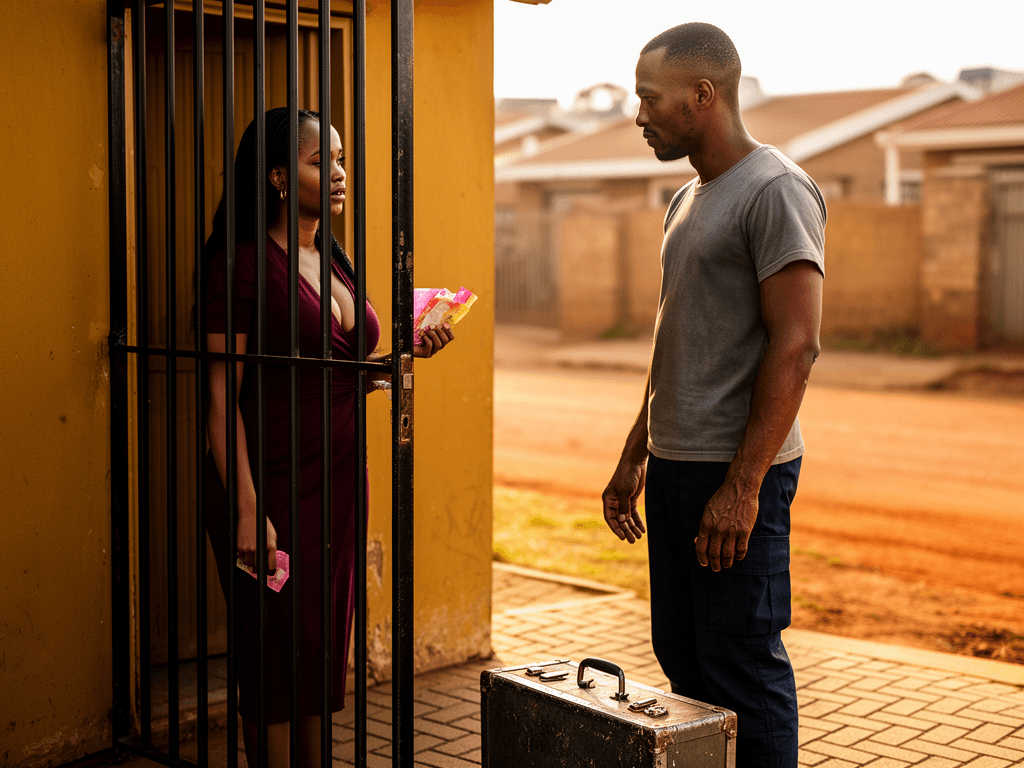
I was wrist-deep in soap water when my phone rang on the kitchen windowsill. I dried one hand on my apron — the good apron, the one with the dark red ties Mama gave me before she passed — and answered with the smell of Sunlight soap still on me.
"Hello, Mama Mavuso speaking."
A man's voice. Low. Polite. Asking about the back room.
"Two thousand five hundred a month. Plus your own lights. Rent upfront, not in arrears. One month deposit. I've had enough trouble before."
"I can come this afternoon."
"Bring a small bag. The room's small."
He said "Two o'clock," and ended the call before I could say anything else.
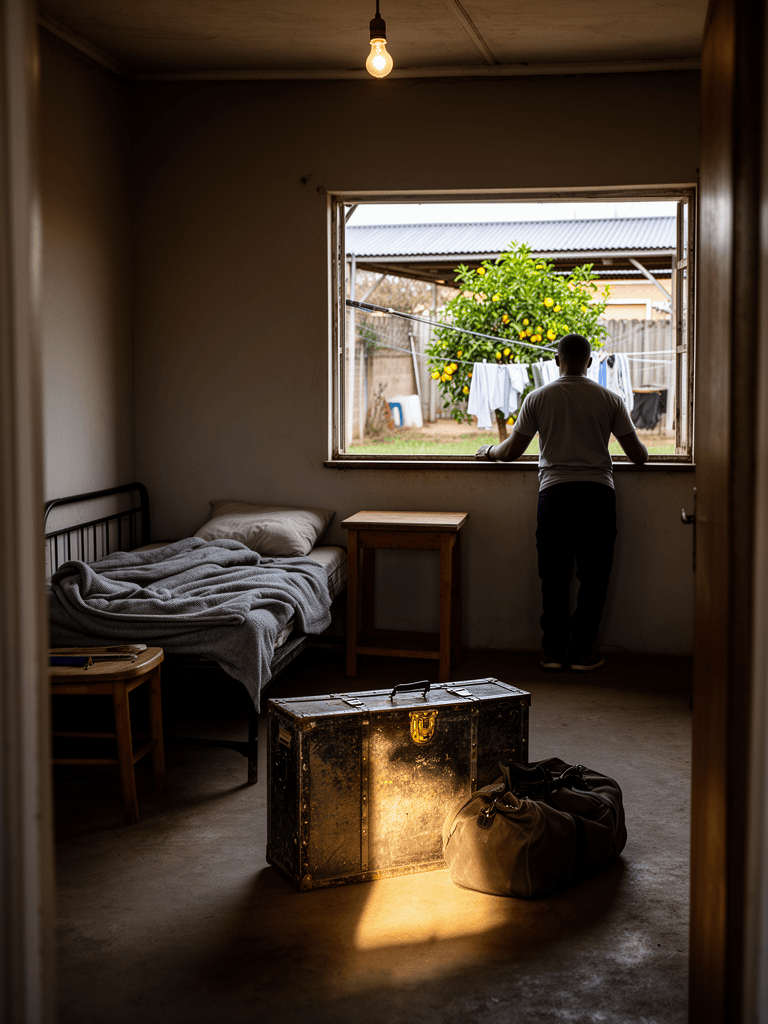
I put the phone down and looked out at my backyard — the twin Defy machines rumbling under the zinc shelter at the back, sheets and church dresses on the lines, the lemon tree shedding leaves all over the cement. The back room sat at the far end of the yard with its own door, the one Sipho was going to turn into a workshop before the workshop became the least of our problems.
A year, that room had been empty. A year of me telling myself the rent didn't matter — that I had the laundry, the regulars, the steady. A year of me also doing the maths every Wednesday before church and not liking what came out.
Two thousand five hundred a month. That'd close the gap, sis. That'd cover the school fees, the new pair of work shoes, the bond letter that came last Tuesday.
I'd married him at twenty-six. Eight years later he'd cashed out our joint account in one weekend, signed our cars over to a man in Linbro, took the business we'd built together and dragged it into the fraud case that took his name first, then mine, then everything. The day the court let me keep the house I sat on this stoep and counted what was left. Three sets of bedlinen. One Defy machine I'd paid for myself before the marriage. A car I had to sell within a month. My name — the one I'd kept, Mavuso, not his — and a backyard he hadn't bothered to take. That was what I started with. The laundry came later.
I went back to the water. The man on the phone didn't sound like trouble. They never do.
He was at the gate at five to two.
I saw him from the kitchen window before he saw me. Tall. Broad across the shoulders. A faded navy T-shirt and a small black gym bag in one hand, a green metal toolbox in the other. Short fade, fresh from a barber. Standing there waiting, not banging on the gate the way some of them do.
I dried my hands properly this time. Smoothed my skirt. Opened the gate.
"Mama Mavuso," he said, putting the bag down to shake my hand. His palm was rough. Calloused. A builder's hand.
"Just Irene." I wasn't anyone's mama in this yard.
"Thabo Khumalo."
I took him through to the kitchen. He put the toolbox on the floor; the gym bag he kept in his hand. While I was getting the lease form out of the drawer he reached into his jacket pocket and counted cash on my kitchen table. Six bundles. Each one a month.
"Six months up front. No fuss." He shrugged one shoulder. "If that works."
It worked. Yoh. It worked.
I counted the bundles myself to be sure. Fifteen thousand rand. I'd not held that much cash since the last time Sipho cashed out the joint account, which was a memory I didn't want in this kitchen.
"Plus your deposit?"
"Take it out of the last month if you need to. Or hold it separate. Whichever way you want it."
He handed me another bundle. Two thousand five hundred.
I showed him the back room. He looked around for ten seconds, said "It's fine," and put the toolbox down at the foot of the bed. I left him there with his bag still in his hand. Walking back to the kitchen I kept looking at the money on the table like it would evaporate. Seventeen thousand five hundred rand on my kitchen table. I put it in the proper drawer with the bond papers. Six months and a deposit.
I heard his door close behind me. Soft. He wasn't the kind to slam things.
The first few days were strange.
He was gone before I was up. Returned at five or six, dusty, smelling of cement and the long taxi ride. Showered between six and seven, exactly inside the window I'd given him. Then back to the room.
I told myself this was what I'd asked for. A quiet tenant. Cash up front. No fuss.
But I found myself listening for him. The scrape of his chair. The radio low in isiXhosa. The water in the basin when he washed his hands before bed. I had spent two years training my house to be empty and now it wasn't.
That night I lay in bed and thought about the way Sipho used to fill a house. Always loud. Always wanting. Always there. I thought about the way this new man filled a house — by being almost not there at all, just enough presence to know the yard wasn't empty.
I told myself it was better this way.
I told myself.
Day four. Maybe day five. I lost track.
I came out at sunrise to start the machines and the outside tap didn't drip when I shut it. The slow drip that had been there for eight months. The one I'd been catching in a paint bucket so the cement wouldn't go green. The bucket was dry. The tap was dry.
I turned it on. The handle moved easy now. New washer. Tightened where it should be.
I looked at the back room door. It was closed. The shoes were gone. He'd left for work an hour ago.
I stood there at the tap with the bucket in my hand and I didn't know what to do with my face.
Then I shook my head — don't be soft, Irene — and I started my wash.
But that whole day, between loads, I kept thinking about the tap. About a man who fixes something in another woman's yard without telling her, without asking, and goes off to a job before she sees the work.
I had never in my life met a man like that. I didn't know what to do with him.
By the end of the first week the things he'd fixed had become a list. By the end of the second I'd stopped counting.